Masha’s infant son’s accidental death
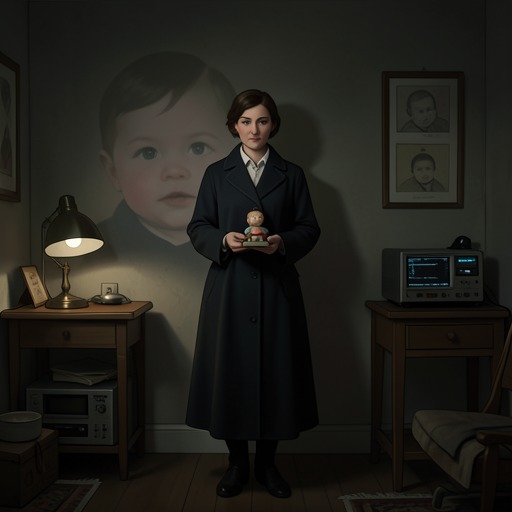
Nine Perfect StrangersMasha’s infant son’s accidental death is the foundational loss in Masha’s life: a preventable household accident that she experiences not as misfortune but as an unforgivable failure to answer her child. The contrast between the ordinary rhythms of that Sunday and the finality of what she finds in his room shapes the grief she carries for years, her rejection of her husband’s comfort, and the solitude from which she later builds her identity and work at Tranquillum House.
The life before the accident
Before her son’s death, Masha remembers herself as genuinely happy. She had an eleven-month-old baby, a demanding full-time job, and a husband; her life felt busy and satisfying. She took pride in her child, imagining him as exceptionally beautiful and intelligent, and delighted in the way his laughter could draw real smiles from people nearby. Those moments let her feel not isolated but at home among other Sydney parents.
Her recollection dwells on the child’s everyday sounds and small accomplishments. On the Sunday in question, he woke without crying and played with his voice, making a musical sound that rose and fell. He called out “Ma-ma! Ma-ma!” and Masha called back affectionately, promising she would come soon. She had nearly finished her work and believed that only a little more time was needed. The episode’s force lies partly in how little separates that routine confidence from the loss that follows.
The accident
Masha finished her work in less than five minutes, perhaps four. When she opened her son’s bedroom door, expecting that he might have fallen asleep again, she found that he had died. He had strangled himself while playing with a long white cord from the window blind. Masha later learned that this kind of accident was not uncommon and that other women had faced the same unbearable task of freeing their babies.
The cord becomes a persistent reminder rather than a detail confined to the past. In later years, Masha notices warning tags on blind cords whenever she enters a room, even from far away. The recurrence turns an ordinary household object into a sign of danger that she cannot stop scanning for. The narrative’s emphasis on the short delay and the familiar setting makes the loss feel at once contingent and irreversible; it does not establish that Masha could have known what was happening while she worked.
Responsibility and separation
At the hospital, Masha’s husband told her that the death was an accident and that there was nothing to forgive. Masha could not accept this reassurance. Her own account fixes on the fact that her son called for her and she did not go to him; she regards that failure to respond as unacceptable. The difference between her husband’s interpretation and hers becomes a dividing line: he offers forgiveness, while she refuses the premise that forgiveness can undo what happened.
Masha also remembers wanting her mother during the immediate aftermath, although her mother had never truly liked or loved her and offered no prospect of comfort. The remembered desire exposes the need for consolation even where she expects none. It does not resolve her grief; instead, it sits beside her rejection of her husband’s forgiveness, showing how bereavement can leave a person reaching for care while unable to receive the care actually offered.
She eventually insisted that her husband leave and find another life. He did so, though much later than she wanted, and Masha felt relief once she no longer had to see the face that resembled their son’s. She refused to read her husband’s emails and wanted no news of him, but learned accidentally, through a man who had known him, that he was healthy, had married an Australian woman, and had three sons. Masha hoped he still sang while cooking, as he had before. Her knowledge of his later happiness coexists with her distance from him: she can wish him well without reopening their relationship.
A grief carried into the present
The loss remains present in Masha’s later life, but the novel does not treat grief as a single, completed episode. Her remembered account links it to her enduring vigilance around blind cords, to her refusal of self-forgiveness, and to the end of her marriage. It also places that personal history beside her later role at Tranquillum House, where Masha’s own unresolved pain and her ideas about transformation inform the way she relates to other people’s suffering.
The narrative juxtaposes this history with the Marconi family’s bereavement after Zach’s suicide. Napoleon’s work with grieving parents includes research suggesting that some teenage suicidal crises are brief and impulsive, and that interruption or removal of a means can sometimes allow an impulse to pass. That discussion does not establish a cause for Masha’s son’s death; it instead underscores how survivors search for explanations and counterfactuals after a death that may have depended on a short, unknowable interval. The parallel preserves the distinction between two different losses while showing how grief can make timing, responsibility, and the possibility of intervention central questions.
Narrative significance
Masha’s son’s death is not presented as a moral consequence or as a loss that can be repaired by a later transformation. The account holds together the facts of an accident, Masha’s powerful self-blame, and her husband’s different understanding. The cord and the few minutes spent finishing work give the memory its concrete shape; the years of refusal, separation, and vigilance show how the event continues to act on the living.
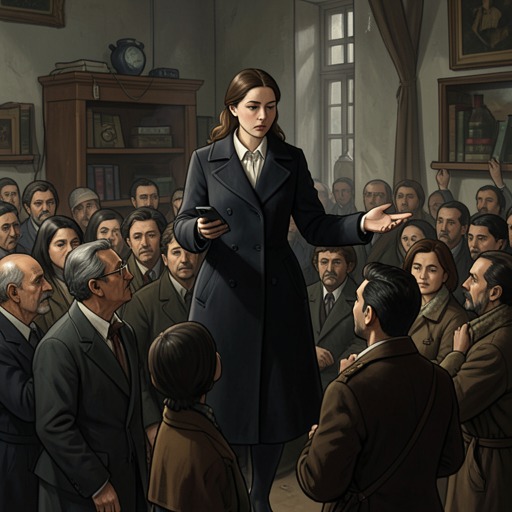
That unresolved history also complicates Masha’s authority at Tranquillum House. She speaks and acts as someone committed to change, yet her own past remains organized around a moment she cannot change and a forgiveness she would not accept. The accident therefore anchors both her personal history and the novel’s scrutiny of transformation: the language of beginning again may offer direction, but it cannot make the past reversible or settle responsibility on its own.